
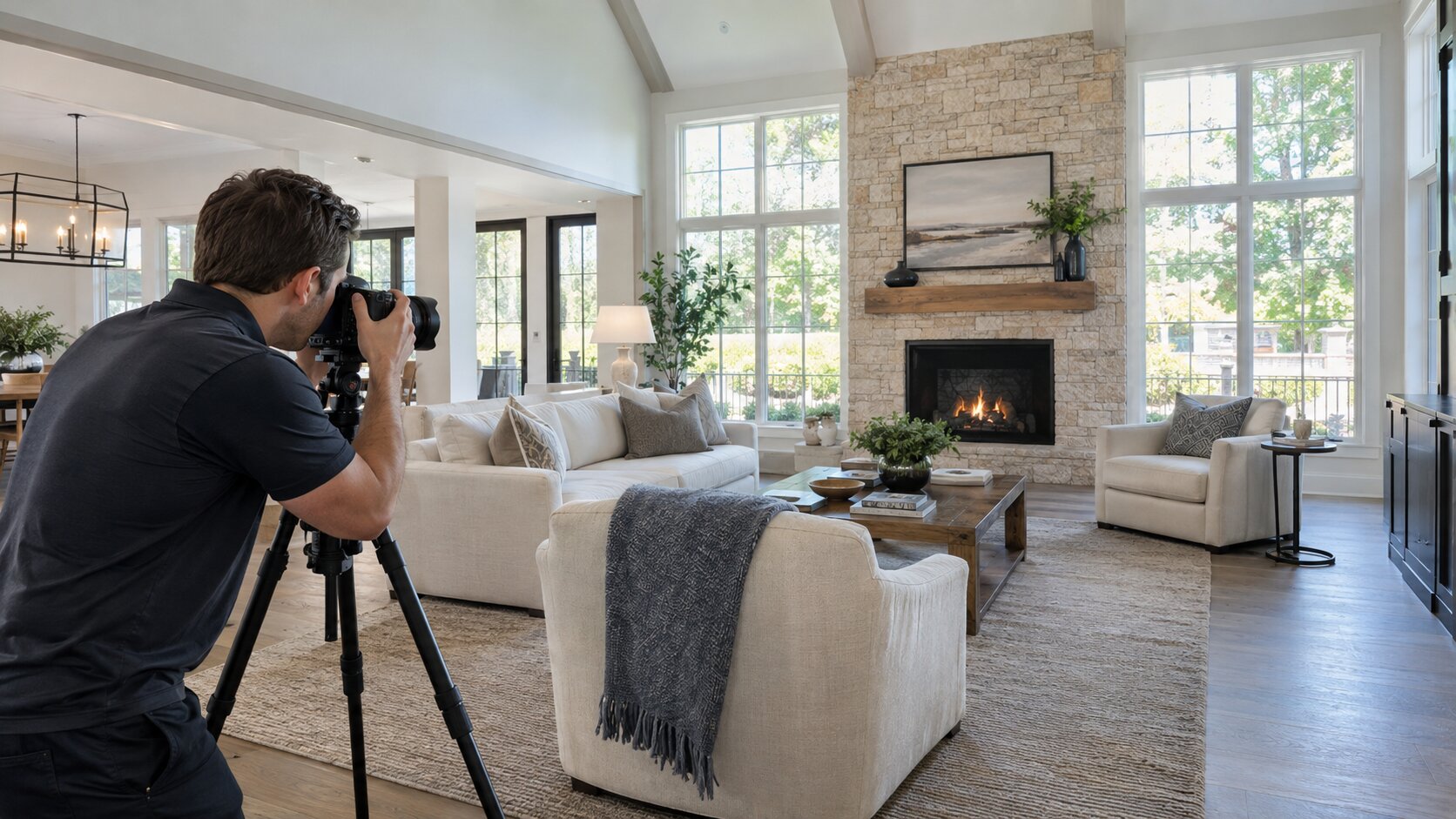
01 Nov Why You Should Use Professional Photography for Real Estate Listings
Listing photos are the first impression a buyer forms of a home, usually before they read a word of the description or check the price. It is the very first thing they see. Unfortunately, creating high quality images is commonly overlooked by some agents who don’t always recognize the benefits of professional real estate photography.
The problem is that phone and amateur photos routinely under-represent a property’s lighting, space, and detail, which pulls buyer interest down before a showing is ever booked.
This short blog post explains why real estate photography is so important to agents, and what a professional shoot changes about how a listing performs.
Key Takeaways
- Listing photos are often the first, and sometimes only, filter a buyer applies.
- Professional equipment and technique correct phone-camera problems like distortion, blown-out windows, and poor low light.
- Editing skills such as color correction and HDR blending take time most agents cannot spare.
- Consistency across the whole photo set counts as much as any single standout shot.
The Online-First Reality of Home Shopping
Nearly every buyer these days starts their search online, scrolling listings on Zillow, Realtor.com, and the local MLS long before they even set foot in a home. So, the photos do the very first showing, whether you planned it that way or not. A buyer creates an immediate, unwavering opinion in the second or two it takes to swipe past a thumbnail, and a weak lead photo means they never open the listing to see the rest.
This is the reason why real estate photography is important in a way that it simply was not twenty years ago. Back then, a buyer met the home through an agent and a drive-by. Today they meet it through a screen, and the quality of that impression decides whether your listing gets a click or gets skipped.
If you have ever wondered why use professional photography for real estate when your phone is in your pocket, that change in dynamic is the answer.
| ℹ️ Fast Fact: The human eye forms a first impression of an image in about 50 milliseconds, faster than a conscious thought, which is roughly how long your listing photo has to land. |
What Buyers Actually Notice in Listing Photos
Buyers rarely analyze a photo consciously, but their eye catches the same things every time. Brightness comes first: a dim, flatly lit room reads as small and unwelcoming, while a bright, evenly exposed one feels open.
Straight lines come next, since walls that lean and doorways that bow, a common side effect of phone wide-angle lenses, make a room feel subtly wrong even when a viewer cannot say why.
Clutter registers instantly too, pulling attention from the space itself, and composition decides whether a room looks generous or cramped. These are the benefits of real estate photography done properly: the photo shows the home at its honest best rather than accidentally at its worst.
Where Amateur Photos Typically Fall Short
There is no question that phone cameras have improved, with the latest iPhones and Samsungs achieving an incredible level of quality, but they still stumble on the exact challenges that a listing presents.
The gaps show up in three predictable places, such as:
Lighting and Exposure
The classic failure is a room with a window. A phone exposes for one or the other, so you get a bright window with a dark, murky interior, or a well-lit room with a window blown out to featureless white. Neither shows the home as it really is. Handling both at once takes proper technique, which is where HDR real estate photography earns its place in the process.
Lens Distortion
To fit a whole room in frame, phone wide-angle lenses stretch the edges, bowing straight walls and making counters and cabinets look warped. Buyers notice the result even if they cannot name the cause, and a distorted room undermines trust in the rest of the listing.
Editing
A raw photo straight off any camera needs work: color correction, white balance, and exposure adjustment to make the image match the room. Most agents do not have the software, the training, or the hours to edit a full set to a consistent standard, so the photos end up looking uneven from room to room.

What a Professional Shoot Adds
A professional does more than own a better camera.
The lighting is handled deliberately, with equipment and technique that fill shadows and balance a room rather than leaving it to chance. HDR blending merges several exposures so a window keeps its view and the interior keeps its light in the same frame.
The editing process is where you will find one of the main benefits of real estate photography. Every image in the set is color-corrected and finished to match, so a buyer scrolling the listing sees one coherent home instead of twenty rooms shot in different moods, while composition is chosen to emphasize space and flow.
This is what professional property photography delivers that a quick phone pass cannot, and it is why the benefits of professional real estate photography will pay off in how a listing performs.
The Cost of Skipping Professional Photos
The risk of amateur photos is not that they look bad in isolation, but that they look bad next to the competition. Your listing sits in a grid beside comparable homes, and if those homes look brighter and more inviting, yours is the one a buyer scrolls past. You never see the showings you lost, because the buyer disqualified the home before you knew they were looking.
For a small fraction of a Westchester or Fairfield County commission, professional photos remove that risk. That return is the practical case for why use professional photography for real estate rather than shooting listings yourself.
| ℹ️ Pro Tip: Book your photography before you advertise a real estate listing, not after. Having the full set of edited photos, video, and floor plans in hand lets you launch on every channel at once, rather than posting a half-finished listing and updating it later. |
Book a Professional Shoot for Your Next Listing
Your listing gets one first impression, and it happens on a screen, pretty much instantly.
That single fact alone is the main case for why you should use professional photography for real estate, as the photos make that impression work for you, showing the home bright, straight, and true to how it feels in person.
Ultimately, choose professional photography for real estate, and your buyers will stop scrolling and start actually booking showings.
Frequently Asked Questions
Can't I just use my phone for listing photos?
You can, but phone cameras struggle with the exact conditions listings demand: bright windows, dim corners, and wide rooms. The photos usually under-sell the space, which is the core reason why using professional photography for real estate is so important.
What makes professional real estate photos different from regular photography?
Real estate work is its own discipline, combining wide-angle technique without distortion, HDR blending for tricky light, and a consistent editing style across a whole set, all aimed at showing a property’s space and flow accurately.
How much does professional real estate photography cost?
It varies with the size of the property and the services you choose. Pricing is quoted per listing, so the figure fits the actual job. See the photography service page for details.
How long does a professional shoot take?
Most residential shoots take one to two hours on site, depending on the size of the home, with edited photos usually delivered within a day.

Sorry, the comment form is closed at this time.