
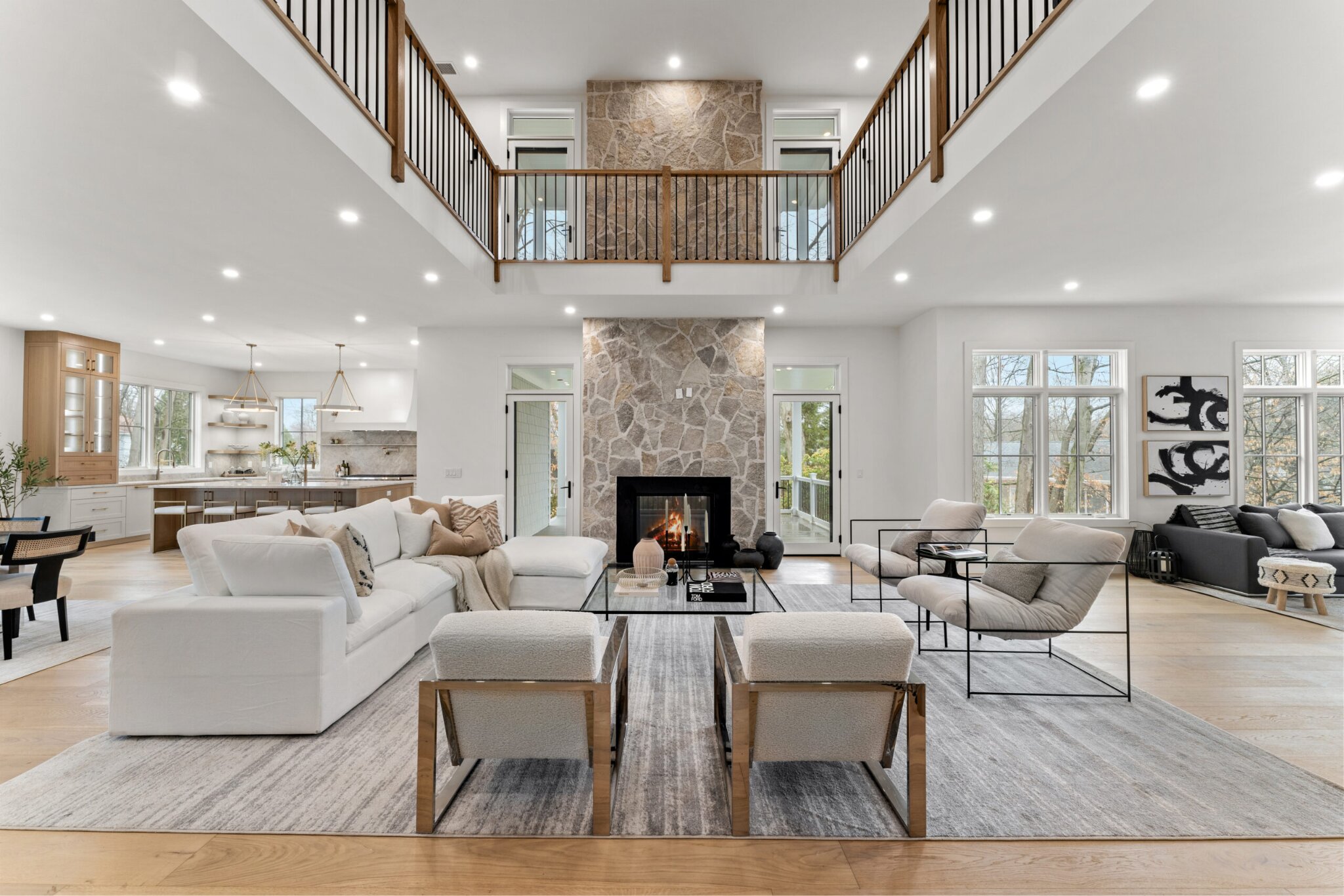
01 Nov HDR Real Estate Photography: Brighter Listings, Faster Sales
A room with a bright window is the most common problem in real estate photography. Expose the shot for the window, and the room turns dark. Expose it for the room, and the window blows out to white with no view behind it.
The problem is that a single photo cannot capture both, so the space that looked good in person ends up looking devoid of any life or clarity when listed online.
The Problem HDR Solves
HDR real estate photography will tackle this problem head on, usually with stellar results. Short for High Dynamic Range, it blends several exposures of the same shot into one image that keeps the window and the interior properly lit at once.
Done well, the result looks natural, and most people would never know it was used. Done poorly, it looks over-processed and artificial, which is where HDR gets its mixed reputation.
By combining a darker exposure that keeps the window and a brighter one that keeps the room, it produces a single image where both read properly, the way the space actually felt when you stood in it.
Key Takeaways
- HDR blends several exposures, often three to five, into one balanced photo.
- Done naturally, the effect should be close to invisible, not obviously processed.
- Over-processed HDR, with halos and oversaturated skies, is what earns the technique its bad name.
- HDR is now a standard part of interior real estate photography, not a paid extra.
What HDR Actually Means in Real Estate Photography
The technique is exposure blending. Rather than firing one frame and merely hoping for the best, the photographer captures the same composition several times at different brightness levels, from dark to light. Each frame records detail the others lose: the dark shot holds the window and the sky beyond it, the bright shot opens up the shadowed corners of the room.
| ℹ️ Pro tip: The best test of good HDR is whether you notice it at all. If a photo looks obviously processed, the blending was pushed too far. When it just looks like a bright, natural room, it was done right. |
Those frames are then merged in editing into one photo that carries the best of each. The finished image shows a room lit evenly, with a window you can see through to the garden or the street outside. For interiors especially, where bright glass and dim corners sit in the same frame constantly, it is the most reliable way to produce HDR real estate photos that look true to the property.

Is HDR Real Estate Photography “Good or Bad”?
The honest answer is that it depends entirely on how it is done. HDR has a bad reputation in some circles, and that reputation is earned by bad HDR, not by the technique itself.
Good HDR is balanced and natural. Colors stay true, contrast looks normal, and the room reads the way your eye perceives it. Most viewers would never guess any blending happened, which is the point. Bad HDR announces itself. The tell-tale signs are easy to spot once you know them:
- A faint glow or halo around window frames and rooflines
- Skies and walls pushed to unnatural, oversaturated colors
- Flat, grey contrast that makes the room look lifeless
- A slightly cartoonish, over-detailed look across the whole image
When people say they dislike HDR, this is almost always what they mean. Skilled HDR real estate photo editing avoids every item on that list, which is why the best HDR work never looks like HDR at all.
| 👉 For more on getting light right in your listings, see our real estate photography lighting guide. |
How Professional HDR Editing Is Done Correctly
Good results start at capture, not in post. The photographer brackets the shot properly, taking a measured set of exposures on a steady tripod so the frames line up cleanly when merged. Rushed or handheld brackets are where a lot of trouble begins.
The blending that follows is restrained, as professional real estate HDR photo editing services aim for a light touch, pulling detail back into the windows and shadows without cranking contrast or color past what looks real.
The last piece is consistency, as every photo in the set is edited to match, so a buyer scrolling the listing sees one coherent home rather than twenty rooms shot in different moods. That same careful process carries through to higher-end work like luxury real estate photography, where the standard for a natural, polished look is even higher.

Sharper Photos That Sell Faster
HDR is part of what makes a listing look professional rather than flat. At Home Media uses careful exposure blending on every interior as standard, so your windows keep their view, and your rooms stay properly lit, without the artificial glow that comes from overdoing it.
For an agent, consistency is crucial when it comes to listings. Every room in the set is captured and edited to the same standard, so a buyer scrolling your listing sees one coherent home instead of a patchwork of bright and dark shots. That is the kind of first impression that gets a property saved, shared, and booked for a showing.
Frequently Asked Questions
What does HDR stand for in real estate photography?
HDR means High Dynamic Range. In practice it refers to blending several exposures of the same shot into one image that holds detail in both the brightest and darkest parts of a room.
Does HDR make photos look fake?
Only when it is overdone. Heavy-handed processing produces halos and unnatural color, but careful blending looks completely natural, closer to what your eye sees than a single exposure ever could.
Is HDR included in a standard photo shoot?
Yes. For most professional photographers, HDR is a standard part of interior work, not a separate line item you pay extra for.
How is HDR different from brightening a photo in editing?
Brightening one exposure lifts the shadows, but cannot recover a window that is already blown out to white. HDR captures that detail in a separate, darker frame first, so the information is actually there to keep.

Sorry, the comment form is closed at this time.