
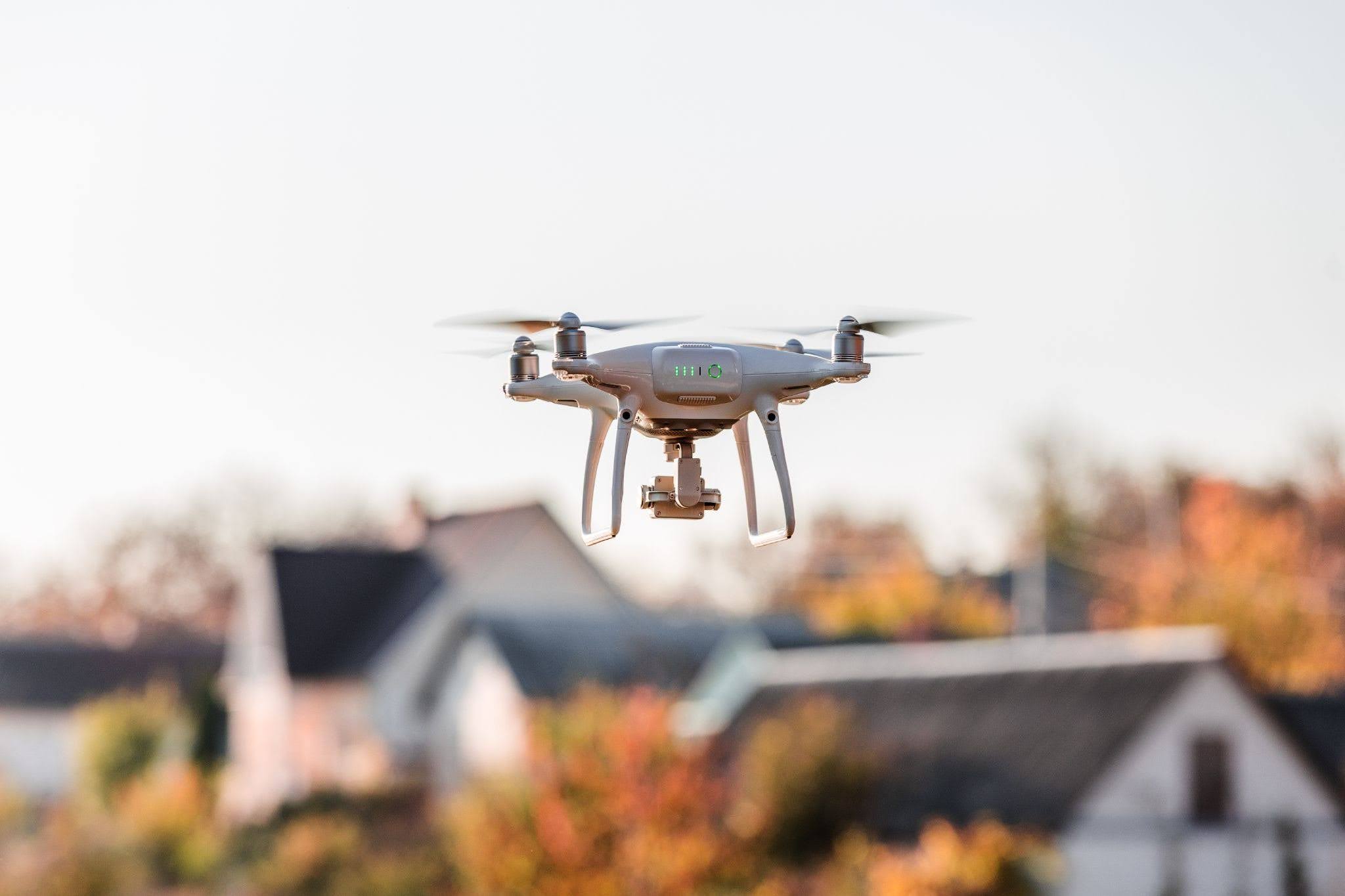
17 Sep Discover the Best Drone for Your Real Estate Photography Needs
Aerial photography has reshaped how properties are marketed, and the demand for striking, bird’s-eye visuals is only growing.
For real estate professionals in competitive markets like Westchester County, the right drone footage can mean the difference between a listing that lingers and one that sells fast.
But with dozens of models on the market, each promising professional-grade results, finding the best drone for real estate photography is genuinely overwhelming. This guide breaks down what actually matters, so you can make a confident, informed decision.
The Real Power of Drone Photography
A standard tripod can only show a tiny fraction of what a home actually offers. To really understand a property, you have to look at it from above.
Aerial imagery is the only way to truly reveal the complete scale of a backyard, the layout of the landscaping, and how close the neighborhood parks or waterfronts really are. It gives buyers that essential big-picture context that you just can’t get from standing out on the curb.
These are details that buyers actively care about, and they’re nearly impossible to convey through standard photography alone.
Nowadays, when buyers typically start their home search online, your listing photos are working for you before anyone walks through the door. Aerial imagery enhances the context and visual appeal that simply isn’t achievable from the ground.
This becomes a great advantage for specific types of listings:
- High-end estates and massive lots: When a property is all about the sheer scale of the land, you need a bird’s-eye perspective to actually prove it.
- Homes near local hotspots: If a house sits right down the street from a golf course, a lake, or a great park, you want to show that proximity rather than just writing it in the description.
- Fresh builds and new developments: Buyers want to see the layout of the entire community and how the home fits into the current neighborhood vibe.
- Properties with major outdoor upgrades: Whether it’s a pristine pool setup, a massive stone terrace, or sprawling acreage, these features just look better when you capture them from above.
In Westchester County, where buyers are discerning and competition is fierce, aerial photography isn’t a luxury add-on. It’s a core part of a compelling listing strategy, and At Home Media’s aerial photography services are built specifically for this market.
The Real Talk on Drone Gear for Property Shoots
Trying to shoot a listing with a cheap drone you bought at a department store is a recipe for disaster.
Those basic hobby kits just cannot handle the demands of a real commercial job, because image clarity breaks down, and a stiff breeze will ruin your shot. If you want to protect your wallet and your reputation, you need to know which internal components actually matter in the field.
The Camera Sensor
If you care about how your still photos look, everything comes down to the sensor’s physical size. Small sensors panic when the light fades, but a bigger piece of silicon drinks in ambient light to keep your images clean and sharp as evening approaches. Don’t even bother looking at gear with a sensor that’s less than a full 1-inch if you plan to charge clients for your work.
Pixels and Resolution
Try not to get too excited about 4K, as it is just the baseline nowadays. The best drones on the market are hitting 5.1K or even 6K resolution.
The real benefit here is the ability to digitally zoom or crop your shot during post-production without turning the grass or roof shingles into an unflattering, pixelated blob. It gives you a massive safety net when you need a tight, detailed look at a backyard feature from fifty feet up.
Surviving Bad Lighting
Real estate photography forces you to deal with absolutely brutal lighting contrasts on a daily basis. You will constantly find yourself trying to expose for a glaring afternoon sky while the front porch is completely hidden in a dark shadow.
You need a camera that boasts high dynamic range capabilities so you can pull details out of those bright hot spots and muddy shadows during editing, unless you want your final product to look like a grainy cell phone picture.
Flight Time and Range
More minutes in the air means you aren’t constantly landing to swap out dead batteries in the middle of a job. Most professional rigs offer anywhere from 30 to 46 minutes of flight time on a single charge, which gives you plenty of breathing room for a standard suburban home.
Transmission range is just as important, especially on massive luxury estates where you need to fly the drone pretty far down the property line without losing your video feed.
Obstacle Avoidance and GPS
Having multi-directional safety sensors will save you from some incredibly expensive crashes, especially when you are navigating tight spaces around mature trees and rooflines.
On top of that, rock-solid GPS keeps the drone perfectly still in mid-air and handles the automated return-to-home feature, taking a lot of the stress out of the flight.
Gimbal Stability
A high-quality, 3-axis mechanical gimbal is what fights the wind and keeps your camera perfectly level while the drone moves. If you are planning to shoot a real estate video, this feature is absolutely mandatory. Shaky, jittery footage instantly ruins the premium feel of a listing and makes the whole production look cheap.
Essential Features Summary Table
| Feature | Why It Matters for Real Estate | Minimum Recommended Spec |
|---|---|---|
| Sensor Size | Image quality, low-light performance | 1-inch CMOS |
| Resolution | Detail, cropping flexibility | 4K (ideally 5.1K+) |
| Dynamic Range | Sky vs. shadow detail | 12+ stops |
| Flight Time | Coverage per battery | 30+ minutes |
| Obstacle Avoidance | Safety, crash prevention | Multi-directional |
| Gimbal | Smooth video and stills | 3-axis mechanical |
The Best Drones for Real Estate Photography: Our Honest Review
The tech in this industry changes incredibly fast. We evaluated the current lineup based on real-world field testing, focusing entirely on how well they handle actual property shoots, how reliable they are in a breeze, and the quality of the final images.
DJI Mavic 3 Pro: The Heavy Hitter
The Mavic 3 Pro is the benchmark for professional real estate drone photography. Its triple-camera system includes a primary 4/3-inch CMOS sensor (one of the largest available in a folding consumer drone), a medium tele lens, and a 166mm tele lens, giving you genuine focal length flexibility from a single aircraft.
- The Best Parts: A massive Hasselblad camera with nearly 13 stops of dynamic range, pristine 5.1K video, 46 minutes of air time, full omnidirectional crash sensors, and a massive 15km signal range.
- The Downside: It will absolutely dent your bank account. You are looking at roughly $2,000 to $2,200 (depending on the bundle), which is a tough pill to swallow for beginners. It is also noticeably bulkier than other folding options.
- Who It Is For: High-ticket luxury listings, seasoned drone pilots, and anyone who refuses to compromise on image quality.
DJI Air 3: The Golden Mean
The Air 3 hits the sweet spot for professionals who want professional-grade files without the steep price or the heavy footprint of the Mavic 3 Pro. It relies on a dual-camera setup with a pair of 1/1.3-inch sensors that cover almost every typical angle you would need on a standard suburban shoot.
- The Best Parts: Crisp 4K video at 60 frames per second, 48-megapixel stills, a 46-minute battery life that rivals the top-tier rigs, full obstacle avoidance, and a price tag hovering around $1,100 to $1,300.
- The Downside: The smaller sensor size means you will notice a bit of grain or lost detail when shooting in low light or against a harsh, bright sunset.
- Who It Is For: Busy agents who need a portable, reliable workhorse that they can toss into a backpack and use all day long.
Autel Evo Lite+: The Low-Light Dark Horse
Autel gets overlooked way too often, but the Evo Lite+ is a serious competitor. It features a true 1-inch sensor and a physical variable aperture that lets you manually adjust your lighting from f/2.8 down to f/11, a feature that is incredibly rare at this price.
- The Best Parts: A 1-inch sensor with manual aperture control, rich 6K video, 40 minutes of flight time, excellent night-mode processing, and complete freedom from the strict geo-fencing software blocks that DJI uses. It usually retails between $750 and $900.
- The Downside: Autel’s software app and accessory market are nowhere near as polished as DJI’s ecosystem. Plus, the crash protection only covers three directions, so you have to be much more careful around trees.
- Who It Is For: Photographers who frequently shoot during the golden hour or anyone who wants a powerful alternative to the dominant brand.
Affordable Rigs for Beginners
If you are hesitant to drop four figures on your first piece of flight gear, look at the DJI Mini 4 Pro. It weighs less than 249 grams, meaning it skips past several tedious FAA registration hoops in the US. Despite its tiny size, it still shoots 4K video and features full omnidirectional crash sensors.
If you need to go even cheaper, the DJI Mini 3 sits right around $470. You still get a decent 1/1.3-inch sensor, but you sacrifice the advanced crash protection and some transmission stability.
Both of these compact options will do a perfectly fine job with standard, sunlit suburban homes, though they will struggle significantly when the light fades.
- Who It Is For: New agents testing the waters, occasional flyers, or anyone wanting to practice before investing in a professional setup.
Essential Accessories and Software for Professional Results
Getting the drone is just step one. What you pair it with is more important than most people expect, and it shows in the consistency and quality of your finished work.
Physical Items
Batteries: Two batteries are the bare minimum you should show up with, and three is smarter. Manufacturer flight times are essentially useless as a planning tool because they assume ideal conditions that basically never exist on a real shoot.
Any wind at all, colder temperatures, climbing, descending, hovering against a breeze, all of it drains the battery faster than the spec sheet suggests. In Westchester specifically, once fall hits, you start dealing with weather that genuinely shortens your flights.
Lithium-ion batteries do not like the cold, and you will notice it. What was a comfortable 30-minute battery in July might only give you 20 in January.
ND Filters: If you shoot any video, neutral density filters are not optional. They let you slow your shutter speed down to follow the 180-degree rule, which keeps your footage looking smooth and natural rather than sharp and stuttery in a way that feels off even to viewers who can’t explain why.
Other accessories worth having:
- A padded hard-shell case for getting the drone to and from shoots without damage
- A portable landing pad so you are not taking off from grass or dirt that can kick debris into the motors
- Propeller guards when you are working in tighter spaces
- A tablet mount for the controller, which makes a real difference in bright sunlight compared to squinting at a phone
Digital Solutions
Post-Processing Software: Straight out of the drone, your files need work. Lightroom is the practical standard for color correction and exposure on stills. For video, Premiere Pro and DaVinci Resolve are both solid options. DJI’s Fly app has basic editing built in, but it is not going to cut it for anything you are actually delivering to a client.
Flight Planning Apps: Checking airspace before you fly is not something you do when you remember. It is something you do every single time, no exceptions. Active NOTAMs, airspace restrictions, and weather conditions change constantly, and what was fine last week may not be enough today.
Aloft and AirMap both make this pretty painless, and there is no good reason to skip it. Getting caught flying somewhere you should not be is punished by a fine and can end your ability to work legally as a drone operator altogether.
Drone Photography Techniques and Best Practices for Real Estate
A high-end drone can help, but the equipment alone will not create standout real estate images. Knowing how to work with light, framing, and movement makes a much bigger difference than most people realize.
Aerial photography has its own rhythm, and it usually takes time to develop an eye for what actually looks good from above.
Shoot Early or Late in the Day
Lighting can completely change the way a property looks in photos. Early mornings and late afternoons tend to produce softer light with more depth and warmth, which usually flatters homes far better than the harsh light you get around noon.
Bright midday sun often creates strong shadows and washed-out highlights that are difficult to fix later. If possible, plan drone shoots around sunrise or sunset rather than the middle of the day.
Think Carefully About Framing
The same ideas used in ground-level photography still apply when shooting from the air. Keeping the property slightly off-center can make the image feel more natural, while driveways, sidewalks, fences, and landscaping can help guide the viewer’s eye through the frame.
Height also matters more than many new drone pilots expect. Flying too high can make even a large home feel small and disconnected from the lot.
Flying too low removes the surrounding neighborhood and landscape that helps give buyers context. For most residential listings, a distance of 50 to 120 feet usually creates the right balance.
Keep Drone Movements Slow and Controlled
Smooth movement is especially important for real estate videography. Quick turns and sudden stops can make footage feel amateur and distracting. Slower movements generally look cleaner and more polished.
Simple shots often work best, such as gradually pulling away from the home, rising above the roofline, or circling the property at a steady pace.
Many drones include a cinematic or tripod setting that slows down the controls and makes movements less sensitive. That feature alone can make footage look much more professional, especially for newer pilots.
FAA Regulations
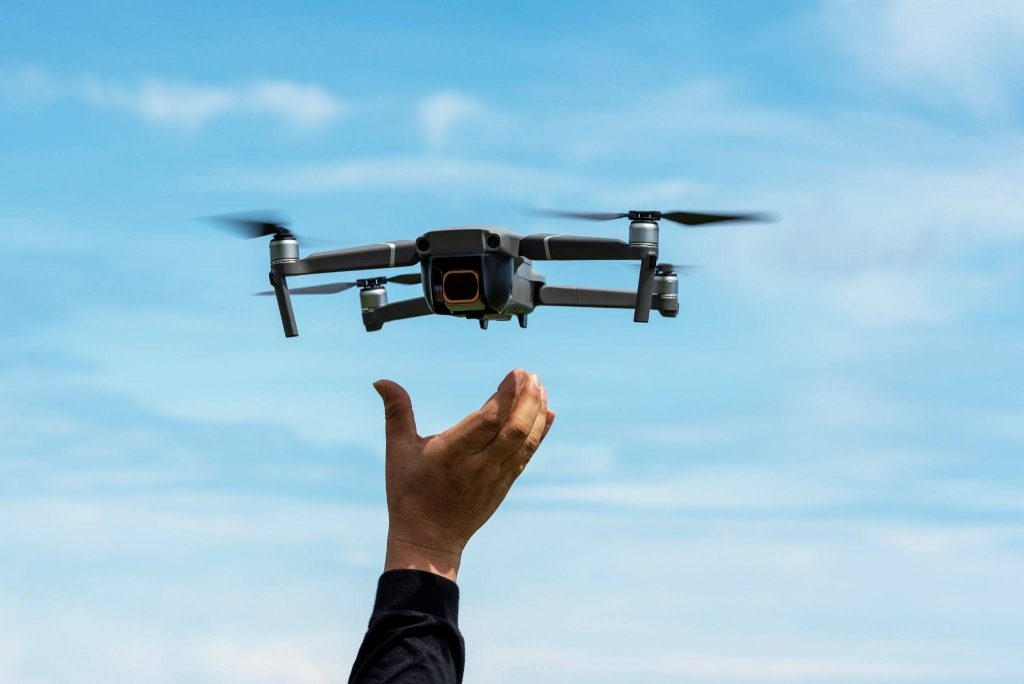
In the US, flying a drone commercially (including for real estate photography) requires a Part 107 Remote Pilot Certificate from the FAA. This involves passing a knowledge test covering airspace rules, weather, and flight operations. You’ll also need to register your drone if it weighs over 0.55 pounds.
Flying in controlled airspace (near airports) requires prior authorization through the FAA’s LAANC system. Ignoring these rules carries real legal and financial consequences.
Privacy Considerations
Be thoughtful about what ends up in your frame. Neighboring yards, windows, and anyone who happens to be outside are not yours to photograph without their knowledge, and in New York, that is not just a courtesy issue.
The state has specific drone-use laws regarding surveillance, and Westchester is not a place where you want to find out where the line is by crossing it. Before you fly anywhere in the county, take a few minutes to understand what you are and are not allowed to capture.
When to Give Up the DIY Hustle and Call a Pro
Handling everything yourself sounds great on paper, especially if you love having complete control over your calendar and your creative vision.
However, the brutal truth is that churning out high-end drone shots requires a massive commitment of cash, hours, and technical skill. Most busy agents simply do not have the bandwidth to balance all three.
Take a hard look at what it actually costs to fly solo:
- A professional drone will run you anywhere from $1,000 to over $2,200.
- Extra batteries, lens filters, a protective case, and a landing pad add another $300 to $600 to the bill.
- The FAA Part 107 study guides and exam fees set you back around $175 just to get your license.
- Professional editing software subscriptions cost $50 to $60 per month.
- On top of the cash, you lose dozens of hours learning how to pilot the drone, mastering complex editing tools, and keeping up with changing airspace laws.
Beyond the financial investment, there’s the question of consistency. A professional aerial photographer has shot hundreds or thousands of properties.
They know how to read light, plan compositions quickly, adjust to changing conditions, and deliver polished, edited files on a tight turnaround. That consistency is genuinely difficult to replicate as a part-time drone operator.
If something goes wrong mid-flight and the drone comes down somewhere it should not, that is on the operator. Damaged property, an injured bystander, a broken window on the house you were hired to shoot, all of it falls back on whoever was flying.
According to the FAA, drone incidents and sightings are common, with more than 100 reports near airports each month, and drone safety remains a recurring concern.
For real estate professionals in Westchester County who want stunning results without the overhead, At Home Media’s team handles everything from flight planning and capture to editing and delivery.
Every shoot is FAA-compliant, fully insured, and optimized for listing impact. Take a look at our real estate media services to see what’s included.
Upgrade Your Listings: Book Your Aerial Shoot With At Home Media
Aerial photography is one of the most effective tools available for differentiating a listing in a crowded market. The right drone, flown by an experienced operator, tells a property’s full story in a way that ground-level photography simply can’t match.
Our team at At Home Media partners directly with real estate agents and local property owners right here in Westchester County to create stunning drone shots that sell.
We handle all the technical headaches, delivering crisp, perfectly framed aerial visuals you can instantly drop into the MLS, share on your social feeds, or use to upgrade your print marketing.
The process is built to be as effortless as possible on your end – you schedule, we show up and deliver.
If you’re ready to see how professional aerial photography can change the way your listings perform, reach out to At Home Media to discuss your next property shoot. The difference shows up in the photos and in the results.

No Comments